Around Clew Bay › Clew Bay › A short drive west of Westport from Westport
Croagh Patrick across the water
From almost every stretch of the greenway you can see the sharp cone of Croagh Patrick across Clew Bay, a mountain climbed by pilgrims for many centuries.
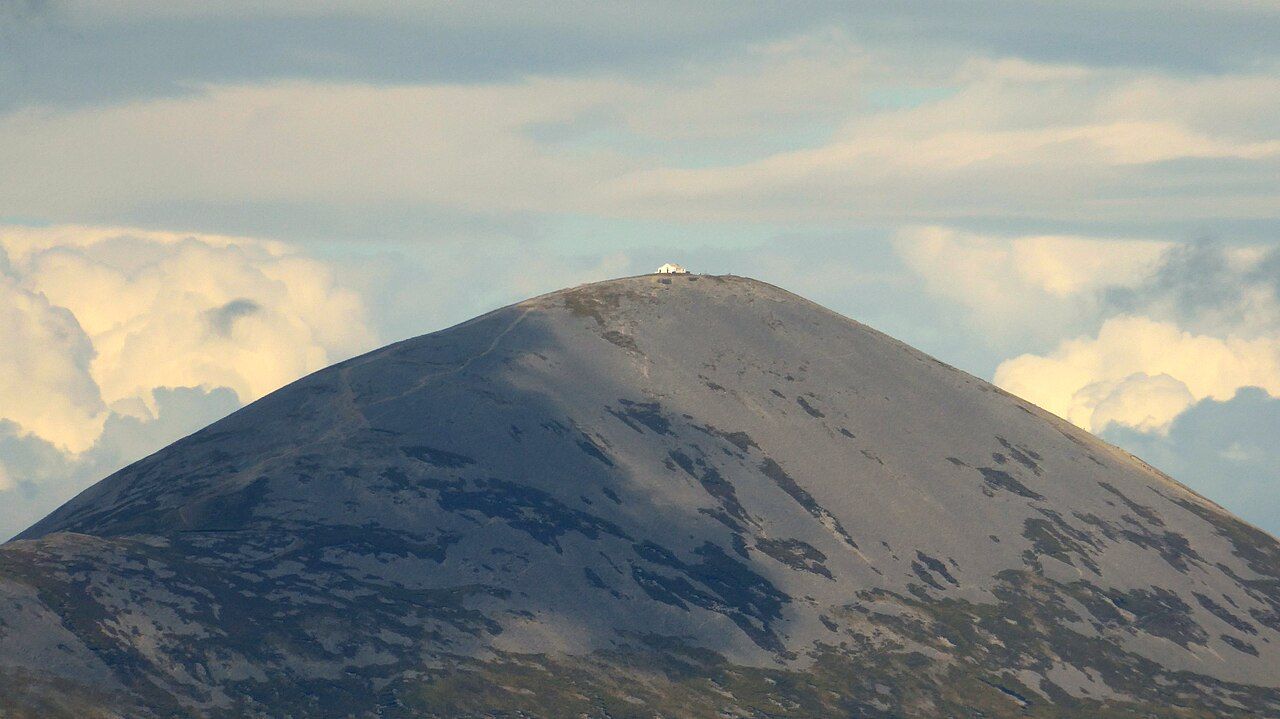
Trail noteFrom the greenway the mountain sits across the bay to the south. Cloud often hides the summit by midday, so early mornings usually give the clearest views.
Ride or walk any stretch of the Great Western Greenway and you will keep catching sight of one mountain. Across Clew Bay, on its southern shore, rises a sharp, almost perfect cone with a small white building on the top. This is Croagh Patrick, known locally as the Reek, Ireland's holy mountain.
From the trail it is a constant companion: blue-grey in the morning, half lost in cloud by afternoon, glowing in the evening light. Many people who ride the greenway come back another day to climb it.
The mountain you keep seeing
Croagh Patrick stands a little over seven hundred and fifty metres high, on the coast west of Westport. It is not the highest mountain in Mayo, but its shape and its position, rising straight from the shore of the bay, make it the most striking. From the greenway between Westport and Newport it lies behind you and to the left; further west, from the bog beyond Newport and from Mulranny, you see it across the full width of the bay.
The views work both ways. From the summit, on a clear day, Clew Bay lies spread below like a map, its drumlin islands scattered across the water, and you can trace the line of the greenway along the far shore. The guide to Clew Bay and its islands explains how those islands formed.
Patrick and the Reek
The mountain's name links it to Saint Patrick, and tradition holds that he spent forty days fasting and praying on the summit in the fifth century. People were climbing the mountain long before that, and there is evidence of activity on and around it from prehistoric times. The Christian pilgrimage has been made for many centuries, and it remains one of the most important in Ireland.
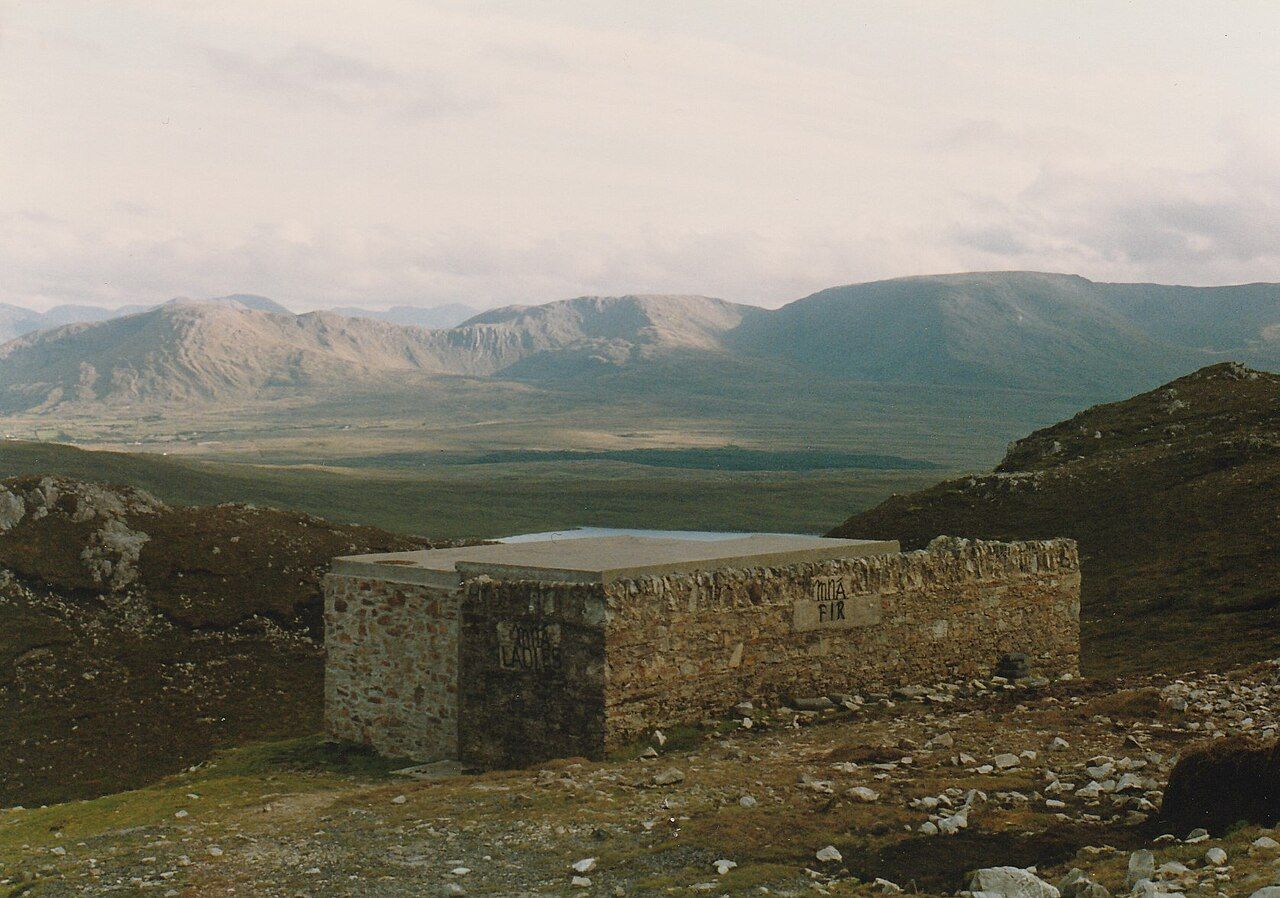
A small chapel stands on the summit, built in the early twentieth century, and there are traditional stations on the way up and around the top where pilgrims stop to pray. For many people the climb is a religious act; for others it is a walk with a strong sense of history. Both are welcome, and both share the same path.
Reek Sunday
The main day of pilgrimage is Reek Sunday, the last Sunday in July. Very large numbers of people climb the mountain that day, many starting before dawn, and Masses are said at the summit chapel. Some pilgrims climb barefoot, as an act of penance, on a path that is rough and stony even with good boots.
Off the trail: The Great Western Greenway, end to end
If you are in the area on Reek Sunday, be aware that the roads near the mountain are very busy and the path is crowded from top to bottom. It is a remarkable occasion, but it is above all a religious one. If you climb that day, do so with respect: give way to pilgrims at the stations, keep noise down near the chapel and do not photograph people at prayer without asking.
The climb in general
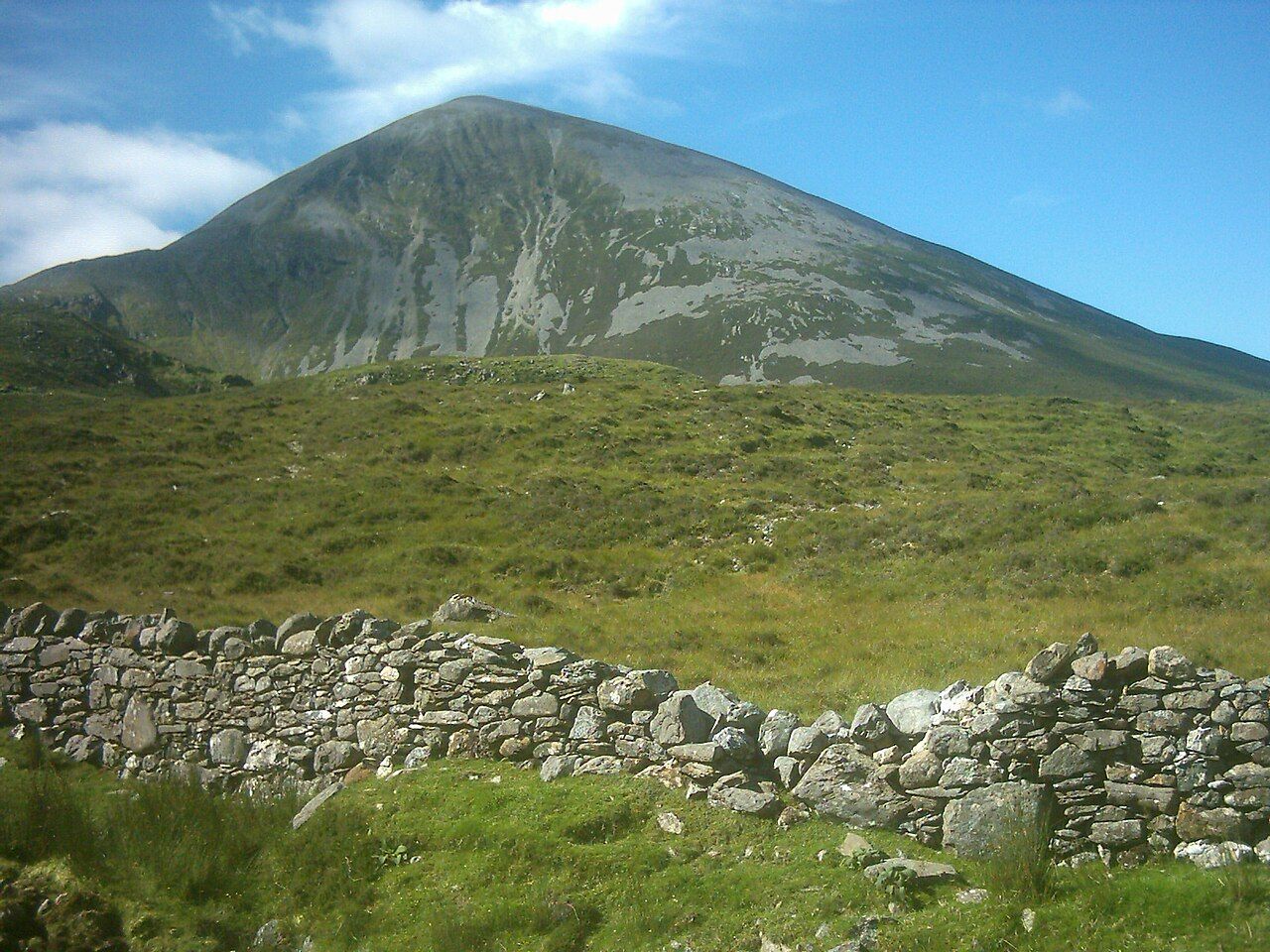
The usual route starts at Murrisk, on the coast road west of Westport, and climbs steadily up the eastern shoulder of the mountain to a saddle, then up the steep final cone to the summit. It is a demanding walk, not a stroll. The lower path is rough and eroded in places, and the final cone is covered in loose scree that shifts underfoot, especially on the way down.
- Allow most of a day; fit walkers usually take several hours up and down.
- Wear proper walking boots; trainers make the scree much harder.
- Walking poles help a great deal on the descent.
- Carry waterproofs and warm layers, even in summer; the top is colder and windier than the shore.
- Take water and food, and turn back if cloud or rain closes in.
Conditions on the mountain change fast. The notes on Atlantic weather explain why cloud gathers on the summit so often.
Murrisk at the foot
The village of Murrisk, at the foot of the main path, has a few things worth seeing before or after the climb. A statue of Saint Patrick stands near the start of the path. Across the road, close to the shore, is the National Famine Memorial, a bronze sculpture of a ship whose rigging is made of skeletal figures, a stark reminder of the emigrant ships that left Ireland in the 1840s.
A short walk along the shore brings you to the ruins of Murrisk Abbey, a medieval friary on the edge of the bay, with views across the water to the islands. It is a quiet place, and a good spot to rest tired legs after the descent.
Seeing it from Westport and the trail
Even if you do not climb, the mountain shapes your time here. From Westport, the coast road runs out past Murrisk with the Reek above it; the guide to Westport town covers the quay and the bay shore. From the greenway, the best views come on the Westport to Newport stage, where gaps in the hedges frame the cone across the water.
Look for it early in the day, when the air is often clearest. By afternoon, cloud tends to build on the summit. When the top clears again in the evening light, stop, turn round and take a long look. It is a view that has drawn people up this mountain for a very long time.
Next note: Clew Bay and its islands