Around Clew Bay › Newport › Under an hour by bike from Westport
Rockfleet and Burrishoole, stone and tide west of Newport
Two old buildings by the water, a short detour off the greenway: a square tower house tied to Grace O'Malley and a Dominican friary on the Burrishoole channel.
Trail noteBoth sites lie off the greenway on minor roads. Leave the trail with care where it meets the road, ride single file, and expect farm traffic on narrow lanes.
West of Newport the greenway runs through rough grazing and bog with the mountains to the north and Clew Bay to the south. The water here is broken up by inlets and islands, and two of the oldest buildings in the area sit right on its edge. Rockfleet Castle, also called Carrickahowley, is a square tower house on a tidal creek. Burrishoole Abbey is the ruin of a friary on the channel that links Lough Furnace to the sea. Neither takes long to see, and both are an easy detour from the trail.
Finding them from the trail
Both sites lie to the west of Newport, off the main road towards Mulranny. Burrishoole Abbey is the closer of the two, a few kilometres out of town, down a minor road towards the water. Rockfleet is a little further on, again reached by a small road running south towards the shore. Signs on the main road point the way, but the turns come quickly, so go slowly and keep an eye out.
From the greenway you will need to leave the trail and use public roads for part of the way. These are narrow country lanes with stone walls, farm gates and the odd tractor, so ride in single file and stop to let vehicles pass where the road is tight. If you are walking the stage from Newport to Mulranny, either site adds an hour or so to the day with time to look around.
Rockfleet Castle
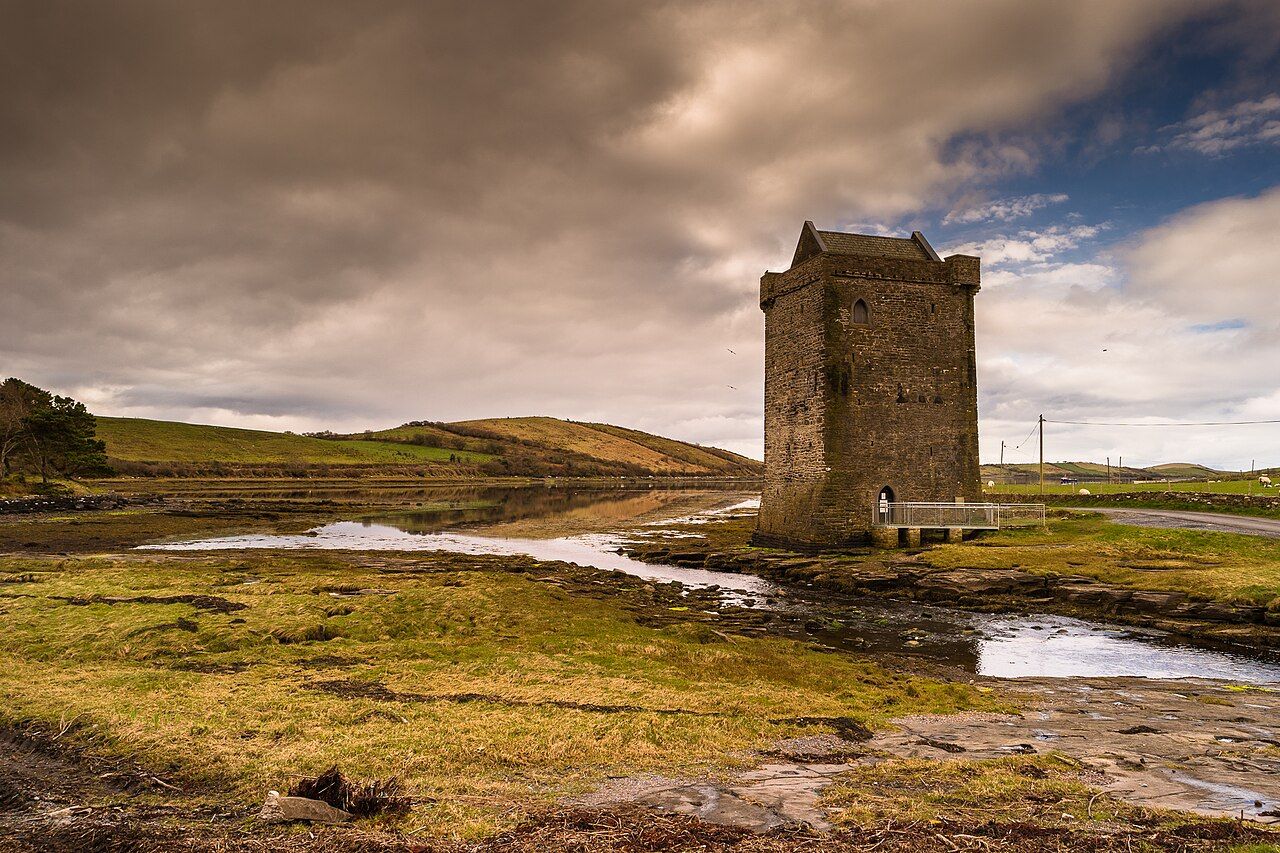
Rockfleet is a classic Irish tower house: a tall, narrow stone block of four storeys with a small turret on one corner, built in the fifteenth or sixteenth century as a defended home for a local lord. It stands on a rock at the edge of a creek, and at high tide the water comes right up to its base. At low tide the creek drains to weed, mud and stone, and the castle looks out over a wide, wet flat with green hills behind.
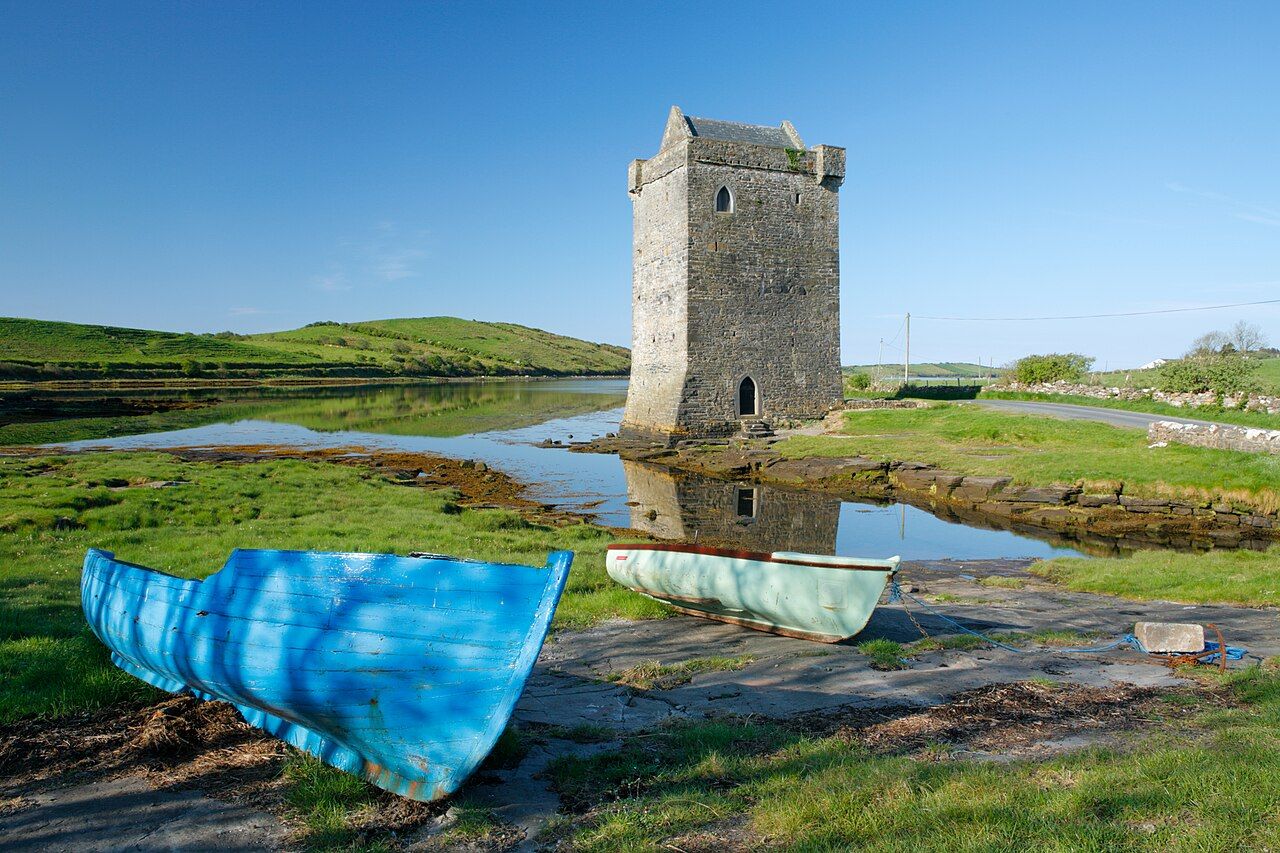
The building is small inside, with one main room on each floor joined by a narrow stair. Access to the interior has been limited for many years and depends on the site's management, so do not count on getting in. The outside, the creek and the setting are reason enough to stop.
Grace O'Malley at Rockfleet
Rockfleet is the castle most closely tied to Grace O'Malley, Gráinne Mhaol, the sixteenth-century leader of the O'Malley family who commanded ships and men along this coast. She married Richard Bourke, known as Richard of the Iron, and Rockfleet came into her hands through that marriage. A well-known story says she agreed to a marriage of one year, took control of the castle and then ended the arrangement while keeping the stronghold. It is a good story, and it may be more legend than record, so tell it as such.
What is better attested is that Rockfleet mattered to her as a sea base, with sheltered water at its door and a short passage to the open bay.
What is better attested is that Rockfleet mattered to her as a sea base, with sheltered water at its door and a short passage to the open bay. Accounts from the period describe her holding out here against an attack from the sea, and she is said to have spent her later years at the castle. For the wider story of her family and the bay, read the guide to Clew Bay and its islands.
Off the trail: Mulranny to Achill Sound along the shore
Burrishoole Abbey
Burrishoole Abbey was founded in the second half of the fifteenth century as a Dominican friary, by a lord of the Bourke family, the same family Grace O'Malley married into. What stands today is the church with its low square tower, parts of the walls of the buildings that once stood around a cloister, and a graveyard that is still in use. The site sits on a slight rise above the water, and the tide comes in close on the seaward side.
The setting is the thing to see. From the abbey you look across the channel towards the islands of Clew Bay, and on the other side to the mountains. The ruin is open, unroofed and quiet, with grass underfoot and gravestones all around. Treat it as the burial ground it still is: keep to the paths, leave the graves alone and do not climb on the walls.
The water around them
Both buildings sit on the edge of the same tangle of water. The Burrishoole channel links Lough Furnace, a brackish lake where river water and sea water meet, to the open bay, and the tide runs strongly through it. Inlets like the one at Rockfleet fill and empty twice a day, which changes the look of each place completely. If you want the water at its best, go at high tide; if you want to see the weed, the mud and the birds feeding on it, go at low tide.
Herons stand in the shallows, oystercatchers and curlews work the mud, and on a still day you may see a seal's head in the channel. The guide to bog, salt marsh and the birds of the bay has more on what lives here.
When to go and what to bring
Late spring and summer give the longest days and the best chance of calm, clear light on the water. Autumn brings big skies and low sun, and fewer people. In winter the lanes are quiet and often wet, and daylight is short, so plan to be back on the trail well before dark.
- Waterproof boots or shoes that can take wet grass and mud.
- Something to eat and drink: there are no facilities at either site.
- Binoculars for the birds on the flats and the islands out in the bay.
- A tide table, or a tide app on your phone, if you care about the view at the castle.
Respecting old stones
Both sites are protected monuments. That means no climbing on walls, no lighting fires and no moving stones, however loose they look. Gates on the way in may cross farmland, so leave them as you find them and keep dogs on a lead near sheep and cattle. Park only where you are not blocking a gate or a lane.
Give each place a quiet half hour and both will reward you: the tower standing in its creek as the tide turns, and the old friary looking out over the same water it has watched for more than five hundred years.
Next note: Sharing the greenway: bikes, walkers and good manners